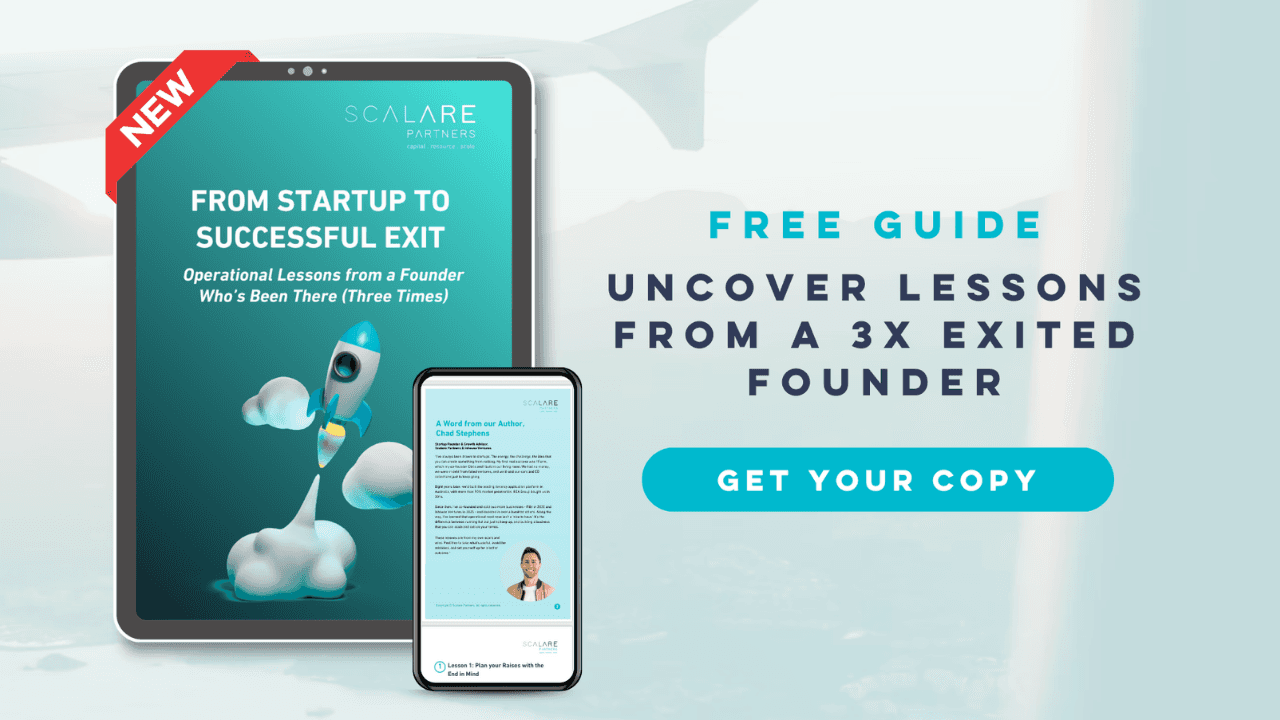
From Startup to Successful Exit
From Startup to Successful Exit
Operational Lessons from a Founder Who's Been There (Three Times)
WHY THIS GUIDE MATTERS
Startup journeys are messy. This guide cuts through theory and delivers practical, battle-tested insights from someone who’s been there - and won. Featuring the lived experience of Chad Stephens, this eBook gives founders direct access to the lessons, missteps, and strategies behind three successful exits. It’s packed with real stories, real advice, and a roadmap to avoid costly mistakes.
Inside, you’ll discover:
✔️ How to tie each raise to your long-term strategy
✔️ Why the best exits start years before you sell
✔️ What buyers value beyond just profit
✔️ The cost of delaying your ops setup
✔️ When and how to use fractional experts
✔️ How to stay exit-ready as you scale
Who It’s For: Early stage founders, seed-to-Series A startups, and scaling tech teams making critical decisions on growth, funding, and operations.
A Word from our Author, Chad Stephens
Startup Founder & Growth Advisor, Scalare Partners & Inhouse Ventures
“I’ve always been drawn to startups. The energy, the challenge, the idea that you can create something from nothing. My first real success was 1Form, which my co-founder Chris and I built in our living room. We had no money, we were in debt from failed ventures, and we’d sold our cars and CD collections just to keep going.
Eight years later, we’d built the leading tenancy application platform in Australia, with more than 90% market penetration. REA Group bought us in 2014.
Since then, I’ve co-founded and sold two more businesses - Fillr in 2020 and Inhouse Ventures in 2025 - and invested in over a hundred others. Along the way, I’ve learned that operational readiness isn’t a ‘nice to have.’ It’s the difference between running flat out just to keep up, and building a business that you can scale and sell on your terms.
These lessons are from my own scars and wins. Feel free to take what’s useful, avoid the mistakes, and set yourself up for a better outcome.”
Lesson 1: Plan your Raises with the End in Mind
“We couldn’t afford to buy our first investor lunch. My co-founder’s parents were ready to give us a credit card over the phone if we needed it. Luckily, the investor paid. A week later, he became our only backer.”
Building 1Form
In 1Form’s early days, we raised money without really thinking about how it linked to a bigger picture. We just needed cash to keep building. We got lucky - our lead investor backed us all the way and we delivered a great return for him.
By the time I was raising for Fillr, I’d learned to think differently. Every raise had to serve the endgame. Were we building toward profitability? Expanding to make ourselves an attractive target? Lining up strategic partners who might one day become buyers?
If you raise without that clarity, you risk wasting precious time and diluting your own stake without building real value.
Quick Wins
✔️ Link each raise to a milestone that boosts valuation and strategic position.
✔️ Keep your cap table clean from the start.
✔️ Hire carefully – and in sync with your funding to avoid cash burn or stalled momentum.
Pitfall Alert
❌Raising without a clear link to future strategy can dilute value and waste time.
Lesson 2: Think Like an Aquirer Early
When Rakuten acquired Fillr, the conversation didn’t start in a boardroom. It started years earlier as a partnership. We worked together, proved our tech in their environment, and built trust.
By the time acquisition talks began, we weren’t strangers negotiating blind. They knew how we operated, we knew their priorities, and the fit was obvious.
I’ve seen founders ignore potential acquirers until they’re ready to sell, thinking they can build a relationship overnight. Unfortunately, it really doesn’t work that way. The best exits are the ones you’ve been quietly laying the groundwork for over years.
Quick Wins
✔️ Keep a list of possible buyers, including partners and competitors.
✔️ Find small ways to work together now, to build strong relationships.
✔️ Keep your house in order so you’re always ready for interest.
Pitfall Alert
❌ Waiting until you want to sell before building buyer relationships.
The best exits are often years in the making. They start with coffee chats, small projects, and trust.
Lesson 3: Optimise for Strategic Value
REA Group didn’t buy 1Form because we were the most profitable. They bought us because we’d captured 90% of the market. It was that dominance that made us strategically valuable.
At Inhouse Ventures, we applied the same thinking. We built a network of more than 10,000 founders, investors, and ecosystem leaders. That community was an asset in itself, and it’s part of what made the business attractive to Scalare Partners when they acquired us.
Revenue matters, but buyers are also looking for assets they can’t easily replicate: customer bases, technology, data, partnerships, market position. Those are the levers that push valuations higher.
Quick Wins
✔️ Identify your unique assets and double down on them.
✔️ Protect them with contracts, IP security, and governance.
✔️ Bring in advisors who’ve sold businesses before to help surface hidden value drivers.
Pitfall Alert
❌ Focusing only on short-term revenue instead of building strategic value.
Lesson 4: Build Operational Foundations Before they Break
I used to think, ‘We’ll sort out proper systems later.’ In reality, ‘later’ usually came in the middle of a crisis. When trying to sell 1Form, we had to scramble to find all of the information required for the due diligence process. This wasn’t fun and I really wouldn’t recommend it!
By my third startup, we had clean ops from day one. Financials up to date, contracts in order, processes documented. It meant I could focus on strategy and relationships instead of firefighting.
Quick Wins
✔️ Put scalable systems in place while your business is still small.
✔️ Use fractional experts to fill gaps until you can hire full-time.
✔️ Hire a capable operations lead early, even part-time.
Pitfall Alert
❌ Treating operations as a ‘later’ problem.
Fixing broken systems in the middle of a deal is one of the most stressful experiences you can have as a founder.
Lesson 5: The Case for Fractional Operational Support
In the early days of both 1Form and Fillr, we couldn’t afford senior hires, but that didn’t mean we couldn’t get senior expertise.
At 1Form, we brought in a part-time CTO to build our platform and a fractional CFO to get our financials investor-ready. At Fillr, we brought in advisors who opened doors to funding and partnerships.
The return on those engagements was huge. Fractional support isn’t just a stopgap. Done well, it’s a way to scale expertise faster than you scale payroll.
Quick Wins
✔️ Identify two or three operational gaps holding you back. Bring in the best person you can find, even part-time. Treat them as part of your leadership team, not outsiders.
Pitfall Alert
❌ Thinking fractional leaders are temporary fixes rather than strategic investments.
WHY CHOOSE FRACTIONAL SUPPORT?
You don’t need a full-time COO, just someone who’s been there, done it, and can jump in to fix the chaos and build a strong operational core.
YOUR NEXT STEP
Every founder dreams of an exit, but very few plan for iet early enough.
The strongest exits are the result of deliberate planning, careful positioning, and having the right conversations well before a deal is on the table.
SCALARE PARTNERS WORKS WITH FOUNDERS TO LAY THAT GROUNDWORK:
✔️ STRUCTURING the business to appeal to acquirers
✔️ PREPARING for M&A with clean operations, strong financials and a clear narrative
✔️ NEGOTIATING to maximise valuation when opportunity comes
Having exited multiple startups myself, I know how much value is gained - or lost - before talks even start.
If an exit is in your future, or you want to be ready when it becomes an option, let’s talk. The earlier the plan, the better the outcome.
NEED SUPPORT?
If you’re navigating this journey and need operational or advisory support, Scalare can help.
Book your free 30 minute discovery call with Chad here.
ABOUT THE AUTHOR
Chad Stephens, Startup Founder & Growth Advisor,
Scalare Partners & Inhouse Ventures
Chad works with founders to help them build stronger companies, scale faster, and prepare for big outcomes. With three successful exits - 1Form to REA Group, Fillr to Rakuten, and Inhouse Ventures to Scalare Partners - Chad brings firsthand experience in growing startups from idea to acquisition. He’s advised and invested in over 100 startups across Australia and the US, helping founders navigate funding, growth, and exit strategies with confidence.
Whether you’re validating product–market fit, scaling operations, or planning your next raise, Chad brings a practical, founder-first approach to every challenge.
Looking to scale or position your business for acquisition? Chad would love to hear from you. You can reach him by email here.
Proudly brought to you by: